This post is also available in:
 Español (Spanish)
  Français (French)
Gros is the neighbourhood our apartment is in, which is why we know it at street level: what time the beach fills up, where the wind comes in, which street is the good one for crossing to the centre. This guide is not a list of places, it is how the neighbourhood works from the inside.
The short version: Gros is the part of San Sebastián where the people of San Sebastián live. Its own beach, the river, a market, high-street shops and the whole centre ten minutes away on foot. It is not the grandest neighbourhood, but it is the most comfortable to spend a few days in.
Where Gros is and what it is like
Gros sits on the right bank of the Urumea, between Zurriola beach, Monte Ulia and the river itself. A few metres of water separate it from the centre and the Old Town, crossed by three bridges: the Kursaal, Santa Catalina and María Cristina.
The layout is a grid of wide streets, full of light and with almost no gradient. That means two things: it is very good for walking, and you can find your way around on your own inside half an hour. From our front door, on Paseo de Francia, you cross the bridge and you are in the Old Town in five minutes.
And it has the quality you notice most after a few days living in it: it is a real neighbourhood. People do their shopping here, take their children to school and go out for dinner midweek. It does not empty out in October.
From fishing quarter to fashionable neighbourhood
For decades Gros was a working-class fishing quarter, on the other side of the river from elegant San Sebastián. Its transformation began in the nineties with the rebuilding of Zurriola beach and was sealed by the opening of the Kursaal in 1999.
Today the two layers live side by side without getting in each other's way: surf shops next to old-fashioned grocers, new counters beside taverns fifty years old. That mix is what gives the place its character.
Zurriola beach
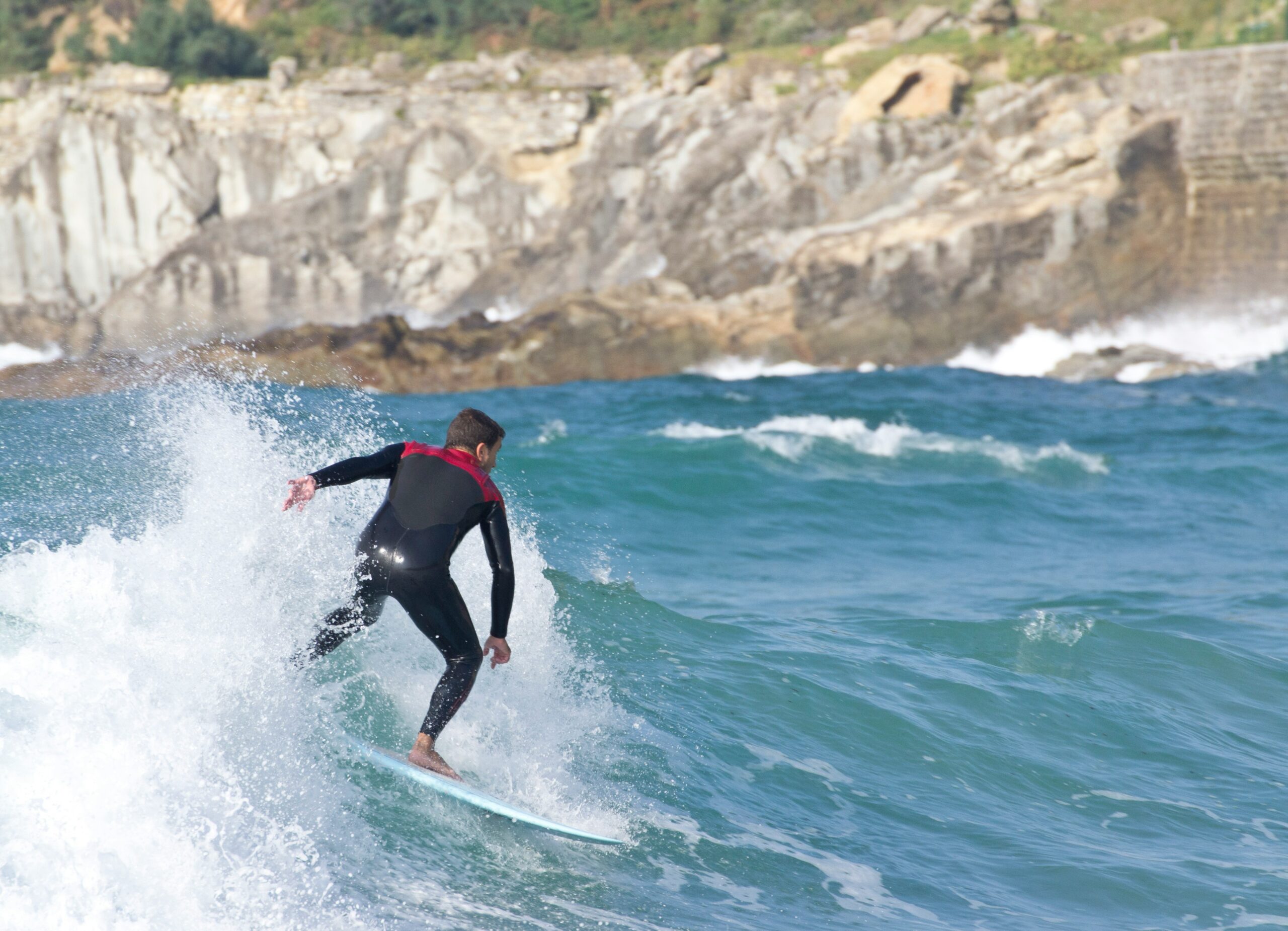
Almost a kilometre of north-facing sand, right in the neighbourhood. Being open to the Bay of Biscay, Zurriola has swell for a good part of the year, and that shapes everything else.
Let's be honest: it is not the beach for a quiet swim or for going in with small children. La Concha, with its enclosed bay, is twenty minutes away on foot and is the one for that. Zurriola is a surf beach, a long-walk beach, a sunset beach, and it works just as well in January as in August.
It has access ramps from the promenade and wooden walkways in season, so you can reach the sand without steps. On the blog we go beach by beach through the accessibility services each one has.
Surfing, without the romance
Schools based on the beach itself run beginner lessons and hire out boards and wetsuits; you book online, and in high season several days ahead. The water is cold all year, so the wetsuit is not optional, not even in summer.
The area by the breakwater is where the wave breaks best and is the busiest; the middle of the beach is calmer for starting out.
The Kursaal and the river
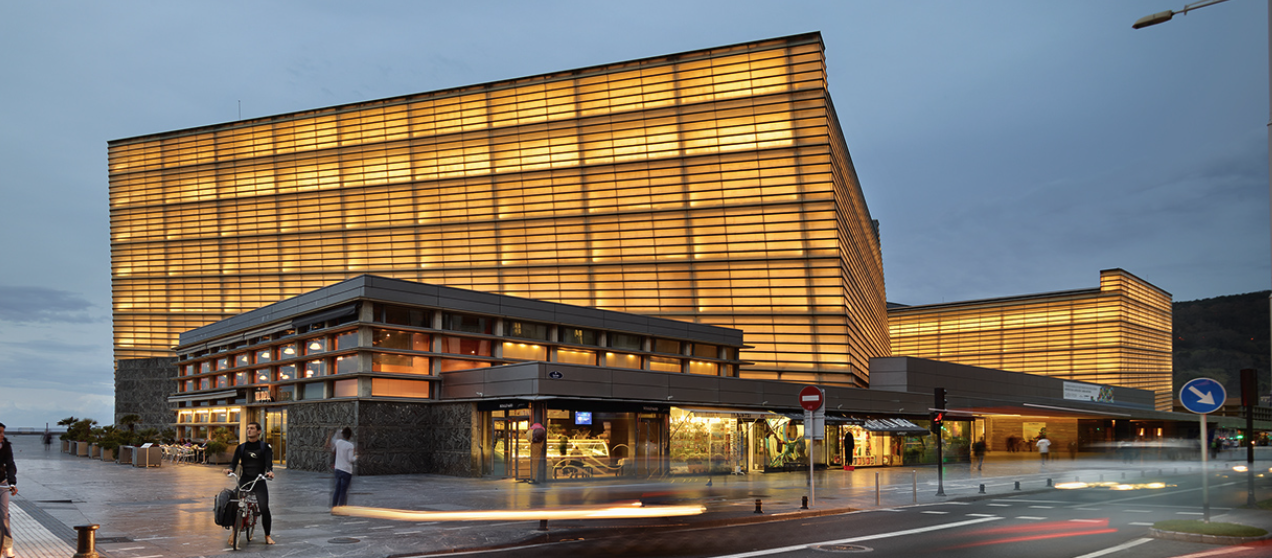
Rafael Moneo's two glass cubes are the most recognisable building in the modern city. The Kursaal hosts the San Sebastián Film Festival every September, along with concerts, conferences and exhibitions all year round. It is three minutes on foot from our front door.
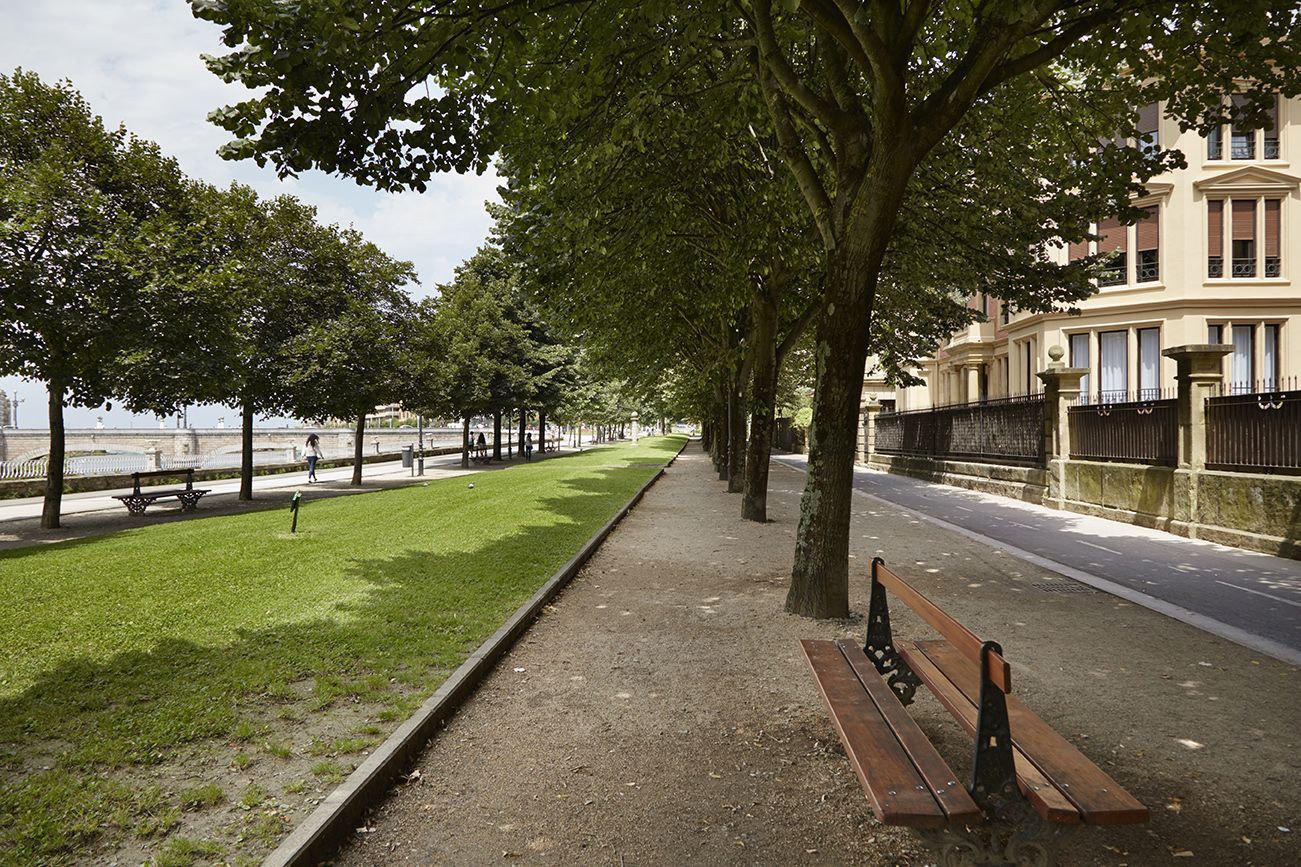
The neighbourhood's other axis is the Urumea. The riverside walk is flat, wide and lined with trees, and late in the afternoon it has the best light in Gros, with the Belle Époque buildings on the opposite bank. It is the walk we do most and the one we recommend after a long journey.
Pintxo culture, explained
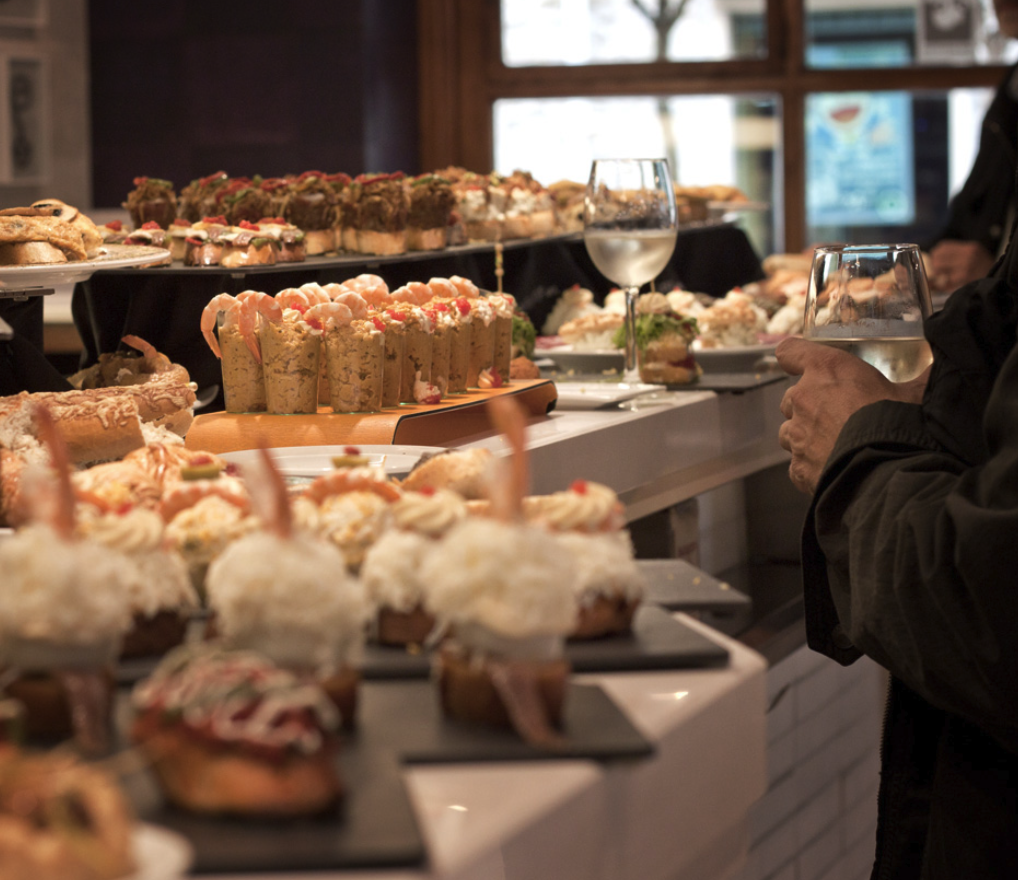
Here is the part that usually gets misread. A pintxo is not a tapa and not a set meal: it is a way of moving. You go into a bar, order a short drink and one or two pintxos — the cold ones are on the counter in plain sight, the hot ones are ordered off a blackboard — you pay and you leave. Then you do it again at the next counter. The point is the circuit, not settling in.
Gros is the city's second pintxo area after the Old Town, with the advantage that the crowd here is still mostly local. There are long-established counters two streets from the apartment and newer places on the streets parallel to the river; midweek, many bars run "pintxo-pote" in the early evening, with a pintxo and a drink at a fixed price.
We are not going to give you a list of names: they change, they become fashionable and they fill up. What does not change is the method. If you want the detail of how to do a round of the neighbourhood, we set it out in pintxos in Gros.
The market and the local shops
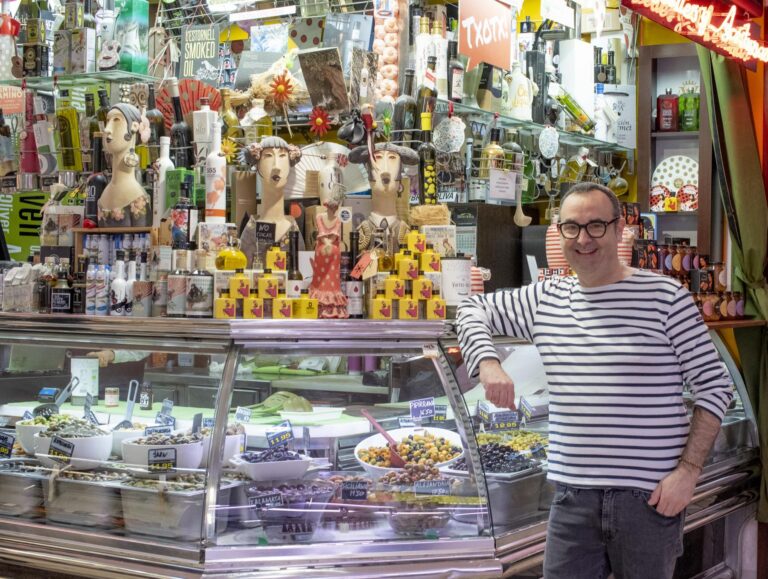
Gros has its own municipal market and, ten minutes away across the bridge, La Bretxa and San Martín, the city's two big ones. They are worth going into even if you are not going to cook: it is the best way to understand what people eat here and in what season.
The rest of the retail is street-level: greengrocers, bakeries, surf shops, local fashion, bookshops.
Monte Ulia, five minutes away
The climb up Monte Ulia starts at the far end of the beach. The first viewpoints are around twenty minutes up an easy path, and from there you see the whole of Zurriola with the bay behind it. To the lighthouse and back is about two hours, easy going; the full route to Pasaia takes three or four hours, with a bus back.
Getting around from Gros
The whole centre is within walking distance: the Old Town in ten minutes, the Boulevard in twelve, La Concha in twenty. The city buses are low-floor with a ramp and connect the neighbourhood with the rest of the city; the train station is a minute from the front door, which makes it very easy to slip off to Hendaye, Bilbao or the coastal villages.
If you are coming by car, be warned: parking in Gros is difficult and paid almost everywhere. Most of our guests leave the car in a car park and don't touch it again until they leave.
Frequently asked questions
Is it better to stay in Gros or in the Old Town?
For sleeping, Gros. It is ten minutes from the centre, it has its own beach and at night it is far quieter than the Old Town.
Can you swim at Zurriola?
Yes, but there is swell almost all year and the water is cold. For a calm swim, La Concha is the better option; Zurriola is a beach for surfing and walking.
Is Gros accessible for people with reduced mobility?
It is one of the easiest areas in the city: flat, with wide pavements and dropped kerbs, and a ramp down to the beach. Our apartment is adapted, with a lift, step-free access and two barrier-free bathrooms.
How long does it take to walk from Gros to the Old Town?
Between ten and fifteen minutes, crossing the Kursaal bridge or the Santa Catalina bridge. The whole route is flat.
Is it a noisy neighbourhood?
Less so than the Old Town. There is life in the street until around midnight, especially at weekends, but it is neighbourhood atmosphere, not a nightlife district.