This post is also available in:
 Español (Spanish)
  Français (French)
The border is twenty minutes away by car. On the other side a different Basque Country begins: red timber framing on white walls, tidy villages and a coastline that changes character as you go down towards Bayonne. You can get there, see it and be back the same day without any rush.
These are the five outings we recommend most often to guests: what to see and how to get there by car, train or bus. From Paseo de Francia you are on the motorway towards Irún in a few minutes without crossing the centre, so the day goes further. If you are still deciding which area to stay in, we go through it in where to stay in San Sebastián.
Saint-Jean-de-Luz, the easiest one
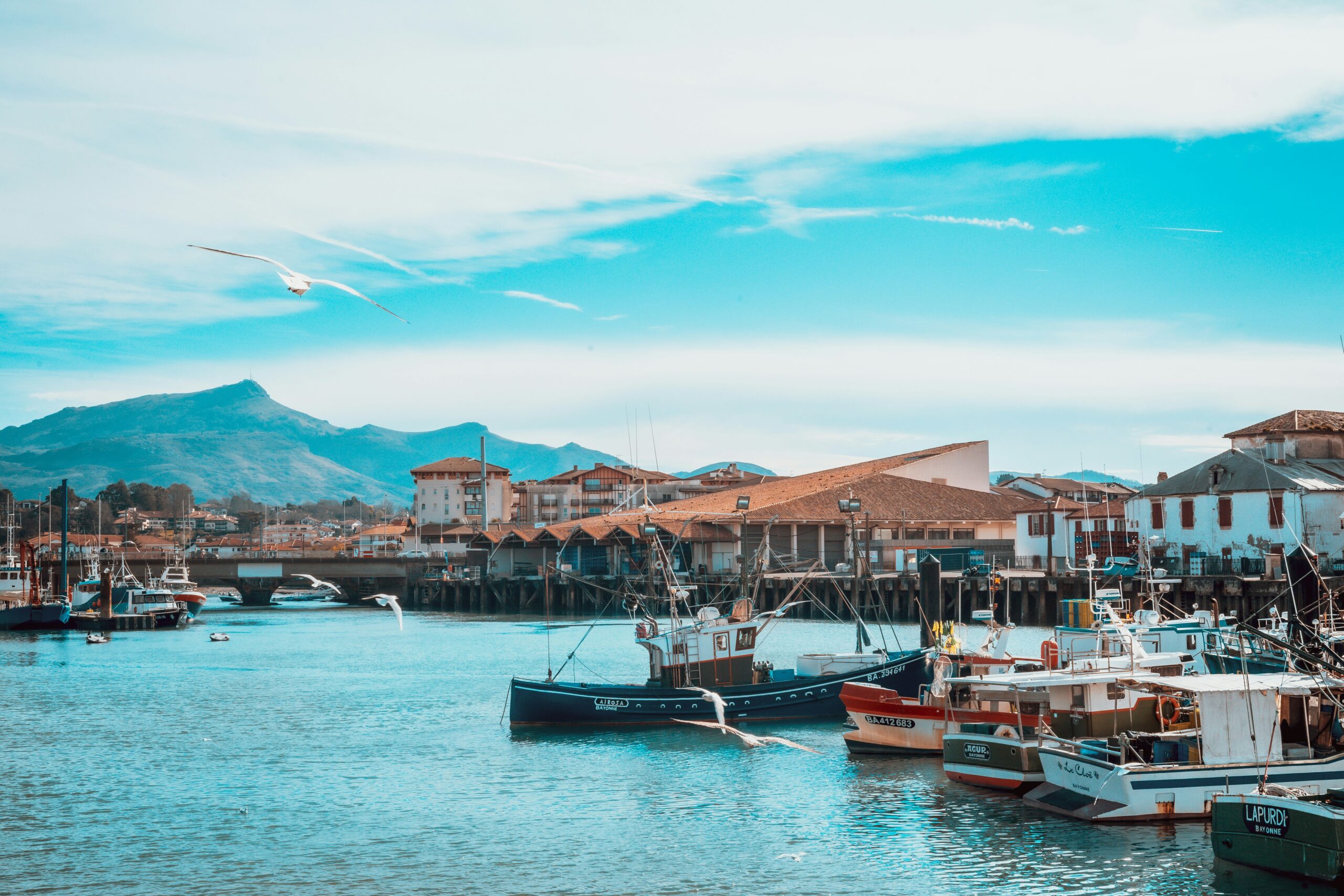
It is the natural first stop and the one that works best if you are only going to cross once. A sheltered bay, a working fishing harbour and a town centre you can walk in a morning.
The harbour is the centre of everything: shipowners' houses painted red, moored boats and a quay to stroll along. The church of Saint-Jean-Baptiste, where Louis XIV married Maria Theresa of Austria in 1660, has wooden galleries and a gilded altarpiece that surprises from the inside; entry is free. Rue Gambetta is the shopping street, with Basque linen and espadrilles. And the beach, protected by breakwaters, is one of the few around here where the sea comes in gently: good for families.
Getting there. By car, the AP-8 to Irún and the A-63 in France: 25 to 30 minutes. By train, Euskotren to Hendaye and the French TER to Saint-Jean-de-Luz, around 45 minutes with the change. Cross-border bus routes take about an hour.
Biarritz, the elegant coast
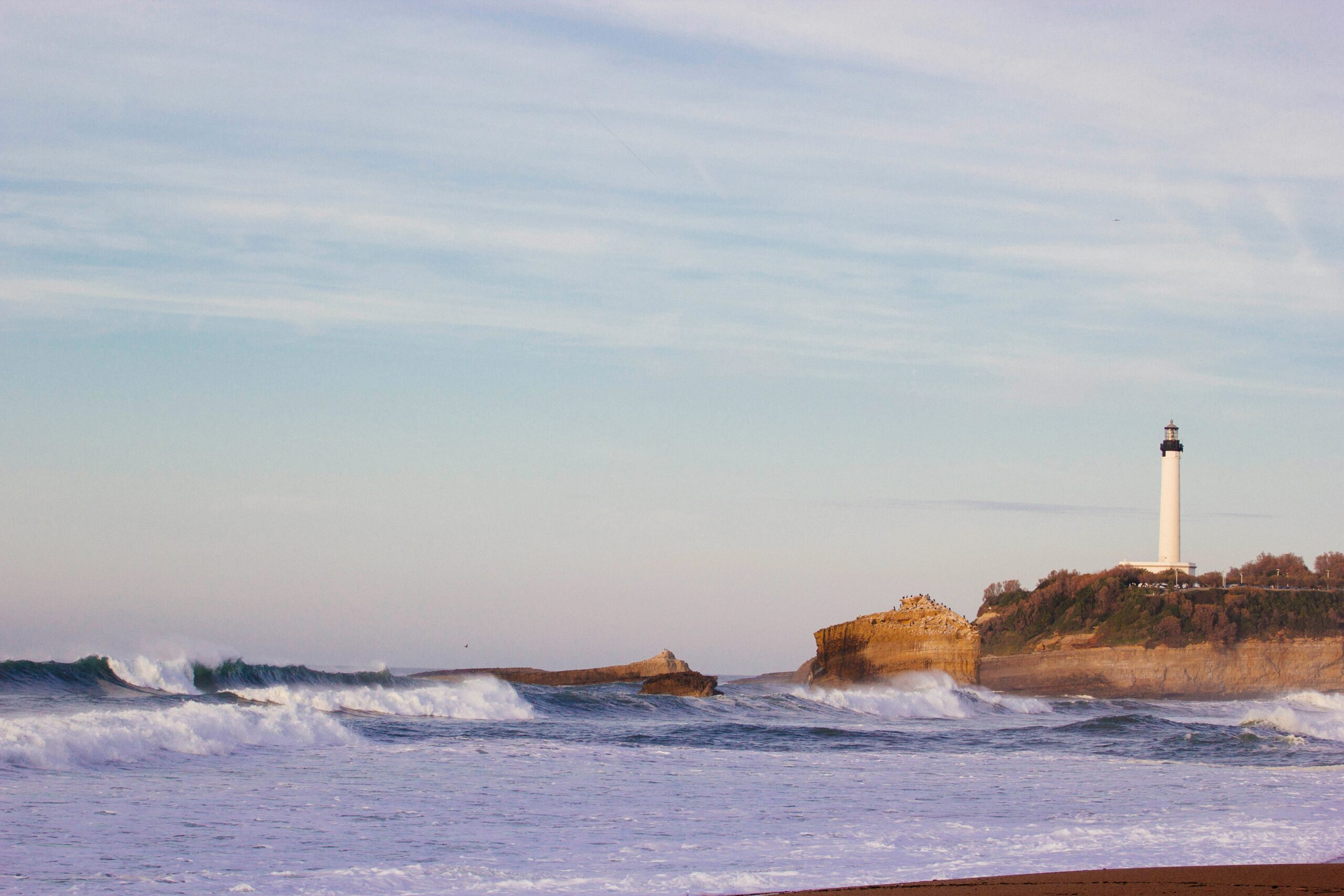
Biarritz is the nineteenth-century spa town turned European capital of surfing. Half a day covers it well, combining a seafront walk, architecture and a market.
The Rocher de la Vierge, the rock joined to land by a metal footbridge out of Eiffel's workshop, is the coastal viewpoint not to skip. Les Halles, the municipal market, opens every morning and is the best place to see the produce of south-west France: cheeses, fish, Espelette pepper, Irouléguy wine. La Grande Plage, with the art deco casino at the end, is for walking; for swimming, the Côte des Basques to the south is more rewarding, although it is a surf beach and not always suitable for everyone.
Getting there. By car, about 35 minutes on the A-8 and the A-63. There is a direct bus from the San Sebastián coach station, around an hour. Parking in the centre in summer is expensive and awkward: better to leave the car in the residential streets to the south and walk up.
Bayonne, the capital of the French Basque Country
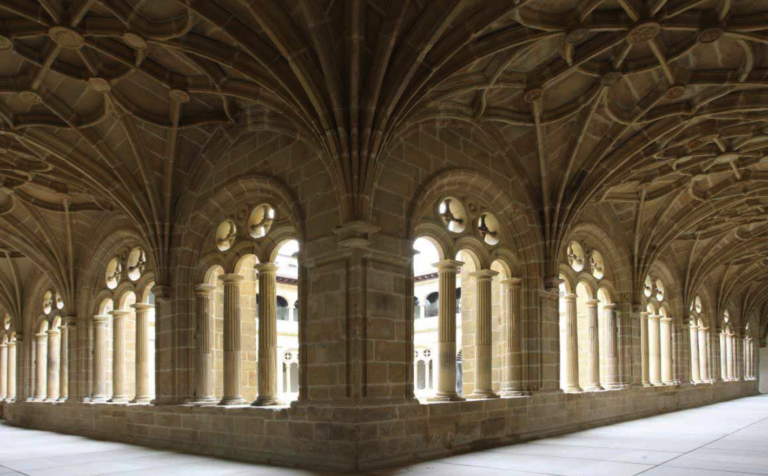
Bayonne is a city, not a village, and it shows. It has a thirteenth-century Gothic cathedral with a cloister, recognised by UNESCO as part of the Camino de Santiago, and two historic quarters separated by the river Nive: Grand Bayonne, with the shopping streets, and Petit Bayonne, younger and more cultural.
The city was the door through which chocolate entered France in the seventeenth century, brought by Sephardic Jewish artisans fleeing the peninsula. That inheritance is still alive in the historic chocolate shops on rue Port Neuf.
Getting there. By car on the A-63, about 45 minutes, with underground car parks in the centre. Direct bus from San Sebastián, between one and two hours depending on stops. Bayonne and Biarritz are a quarter of an hour apart: you can put them together in one day, the cathedral in the morning and the coast in the afternoon.
Espelette, the village of the peppers
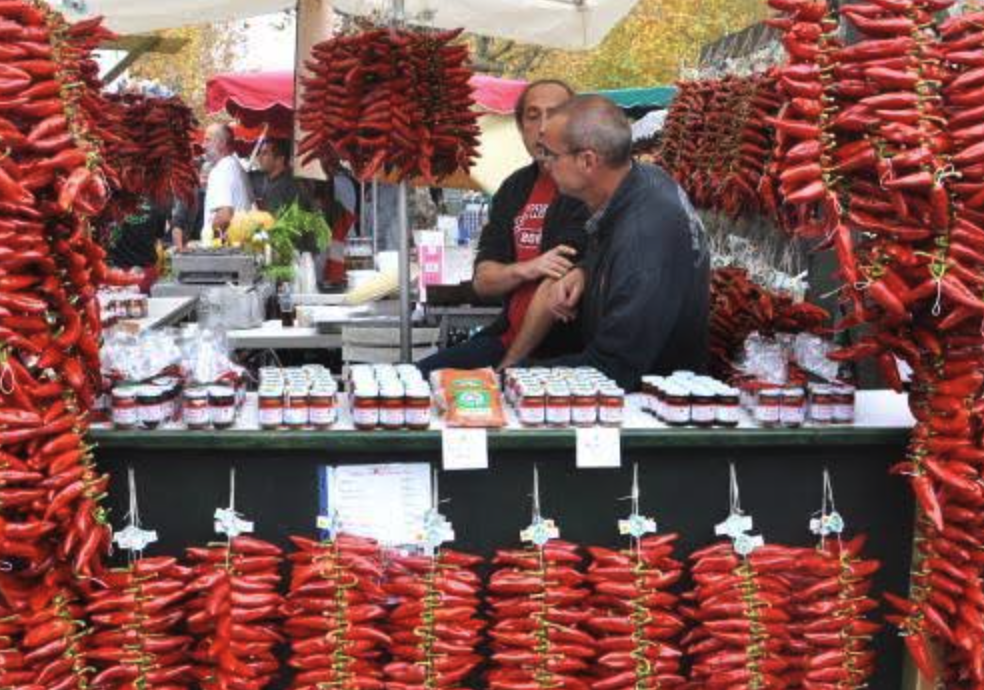
Espelette is small and takes two hours to see, but it leaves you with an image. The white fronts with their red timber framing are covered in strings of peppers hung out to dry from September to November; outside that season, many houses keep them up anyway.
Beyond the facades there is the sixteenth-century church of Saint-Étienne, also a fortress, and the medieval castle of the barons of Ezpeleta, visible from outside. In the centre there is a visitor space devoted to the pepper and its designation of origin. On Wednesday mornings there is a producers' market: the liveliest moment of the week and the best time to take home ground pepper, sheep's cheese or Bayonne ham.
Getting there. Here the car is practically the only option: the A-8 to Irún and the D-918 inland, around 40 minutes. There is no direct bus from San Sebastián. If you are not driving, the alternative is an organised full-day trip taking in several inland villages.
The pepper festival is held on the last weekend of October, with a market, dancing and rural sports. The village fills up, so get there early.
La Rhune, the mountain on the border
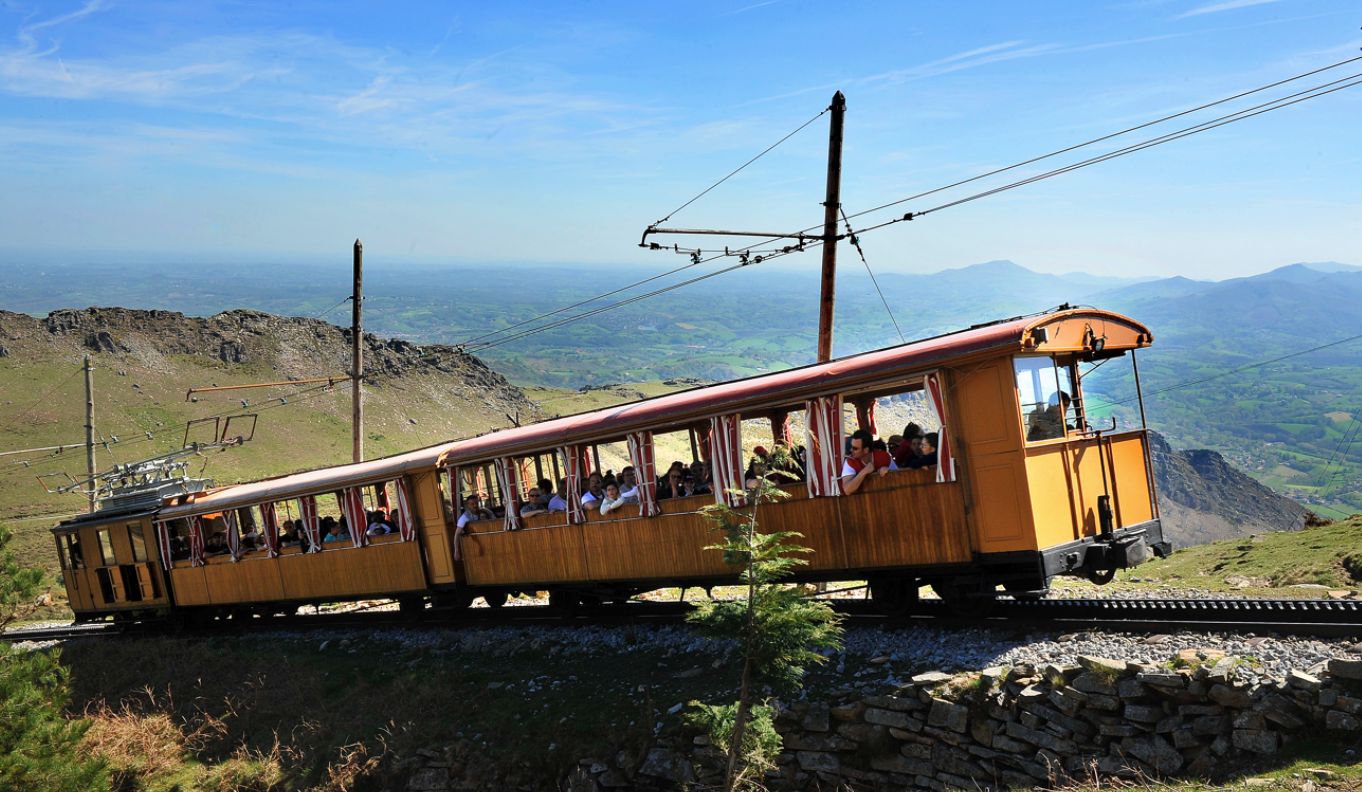
La Rhune, Larrun in Basque, marks the line between the two sides at 905 metres. From the top you can see the Bay of Biscay, the Pyrenees and the French interior; on clear days the coast stretches much further.
The Petit Train de La Rhune, a wooden rack railway running since 1924, climbs from the Col de Saint-Ignace, next to the village of Sare. The journey takes about 35 minutes each way and it is worth allowing an hour and a half at the top. Fares are around 19.50 euros for adults and 12.50 for children aged 4 to 12, with a family ticket outside July and August. The season runs from late March to early November and sells out in summer: book on the official site, rhune.com.
You can also walk up from Sare or from the pass itself, between an hour and a half and two and a half hours depending on the route. A formula that works well is to walk up and take the train down. Nearby are Sare, with its prehistoric caves, and Ainhoa.
Getting there. By car to the Col de Saint-Ignace via Ascain, about 45 minutes, with free parking at the base.
How to spread out the days
If you have several days, the easiest approach is to group them: Saint-Jean-de-Luz with Biarritz one day, Bayonne with Biarritz another, and Espelette with La Rhune, Sare and Ainhoa on a third. May, June and September are the best months: the French coast fills up in July and August, and in the depths of winter La Rhune can close for snow.
Bring a valid ID card or passport. There is no permanent border control, but there are random checks. The currency is the same on both sides, though in markets and small villages some cash comes in handy.
Frequently asked questions
Can you visit the French Basque Country without a car?
Saint-Jean-de-Luz, Biarritz, Bayonne and Hendaye, yes: there are trains and buses. Espelette and La Rhune are off the network and need a car or an organised trip.
How long does it take from the Gros neighbourhood?
From Paseo de Francia you reach the motorway towards Irún in about five minutes, without crossing the centre. Add between 25 and 45 minutes depending on the destination.
Do I need to change money?
No. You pay in euros on both sides of the border and cards work normally.
Which is the best trip with children?
Saint-Jean-de-Luz, for its sheltered beach and flat centre, and the La Rhune train.
What if we are travelling with reduced mobility?
Saint-Jean-de-Luz and Biarritz are fairly flat in their central parts. Espelette and Sare have slopes and cobbles. In our case, being able to set off by car from the front door helps: the apartment has step-free access and a lift.