This post is also available in:
 Español (Spanish)
  Français (French)
San Sebastián has fewer than 190,000 inhabitants and you can walk from one end to the other in about forty minutes. That means almost any central neighbourhood leaves you "close to everything". So the question of where to stay is not settled with a map of distances, but with three things: how much night-time noise you can put up with, how much you want to pay, and what kind of neighbourhood you fancy stepping into when you leave the building.
What follows is a run through each area with the good and the bad of every one. We are hosts in Gros, so you already know which way we lean, but we would rather you chose well than chose us and found it did not fit.
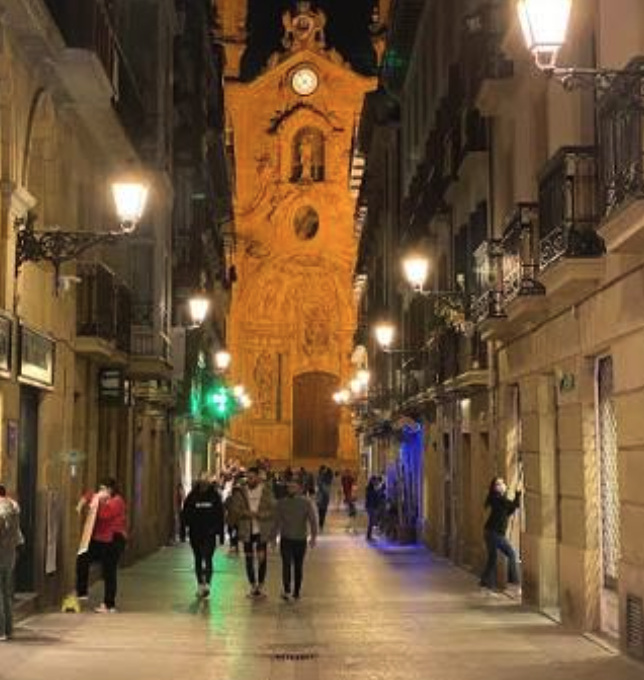
The Old Town: atmosphere at the cost of sleep
This is the postcard: narrow pedestrian streets between the bay and the harbour, with the highest concentration of pintxo bars you will see in your life. If your plan is to go out every night and walk home in three minutes, there is no better area.
In its favour: everything happens there, La Concha beach is a step away and you need no transport at all.
Against it: the noise. From Thursday to Saturday the street does not turn the volume down until the small hours, and the windows in the old buildings do not insulate much. The flats tend to be small, in blocks with no lift and narrow staircases, which makes it the worst area for anyone with reduced mobility or travelling with a pushchair. It is also the most expensive area, along with the centre. As a guide, in mid-season it runs between 120 and 200 euros a night, and in summer and on public holidays it can double.
Gros and the Zurriola: the balance
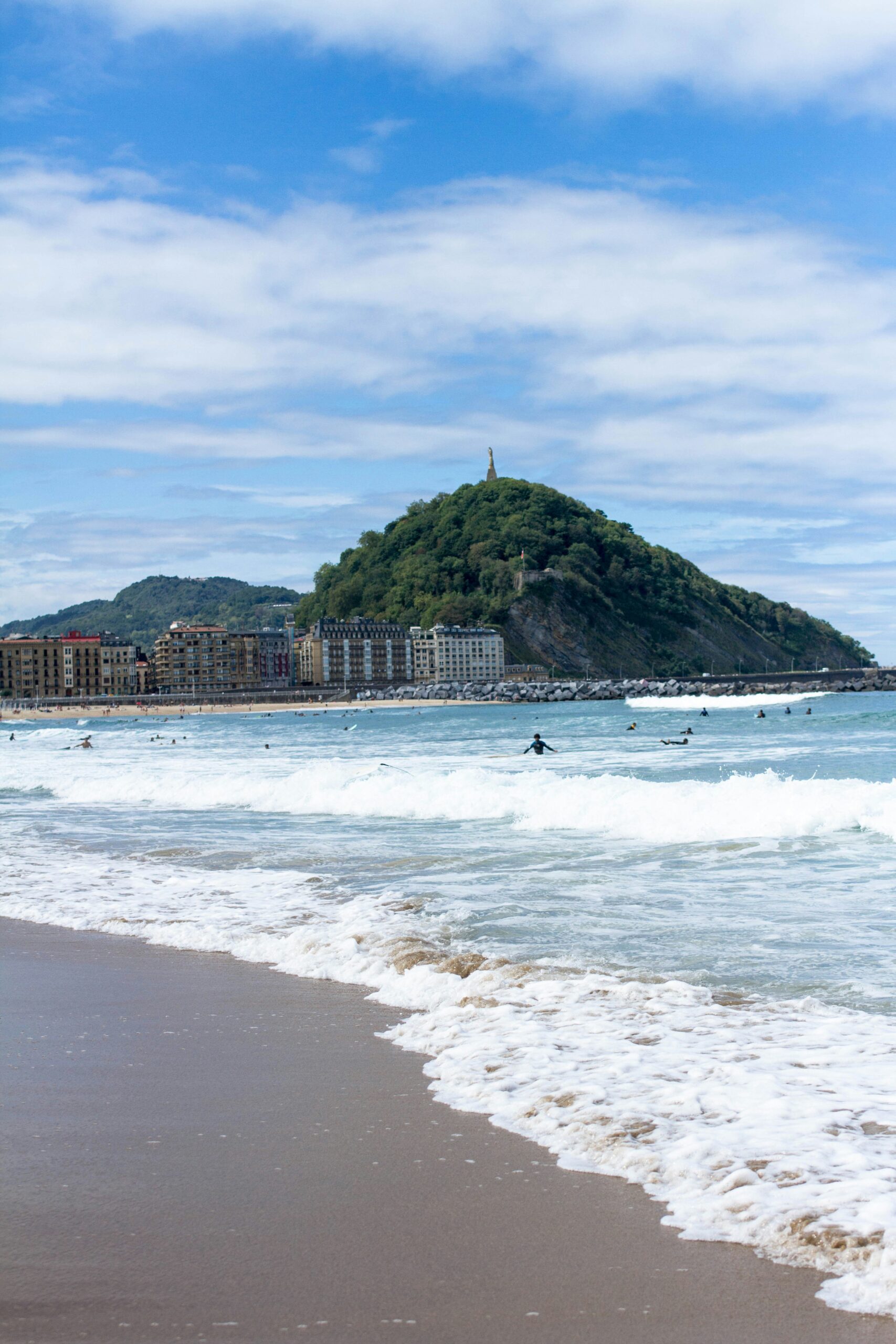
Gros is on the other side of the Urumea, facing Zurriola beach. It is a real neighbourhood, with its own market, its shops and its people doing the daily shopping, and at the same time it has the city surf beach and good bars you can walk into without queueing.
In its favour: the Zurriola is five minutes away on foot and the Old Town ten, across the Kursaal bridge. You sleep better than in the old quarter, prices are noticeably lower and the streets are wide and flat, which you appreciate with a wheelchair, a pushchair or a suitcase. In mid-season it is easy to find something between 80 and 150 euros a night.
Against it: the sea at the Zurriola is rough, with waves and currents almost all year; for a calm swim you have to cross to La Concha. And if you are after the San Sebastián of the classic photographs, here you do not have it out of the window, you have it ten minutes away.
This is the neighbourhood we live in and where our apartment is, on Paseo de Francia, on the riverbank: two bedrooms, two adapted bathrooms, a lift and step-free access, a minute from the station. If you want to get to know the area before deciding, we break it down in our guide to Gros.
The centre and the Ensanche: practical, without much character
The Ensanche is the nineteenth-century grid that joins the Old Town to the station and to La Concha. Wide streets, shops, the Buen Pastor cathedral and plenty of hotels.
In its favour: you are equidistant from everything and can walk anywhere. If you arrive by train or coach and are travelling on a tight schedule, it is convenient.
Against it: it has no beach of its own and no neighbourhood life. It is a place you pass through, and prices are high without the compensation of being by the sea or having the atmosphere of the Old Town. In mid-season it usually runs from 100 to 180 euros.
Antiguo and Ondarreta: the quiet family choice
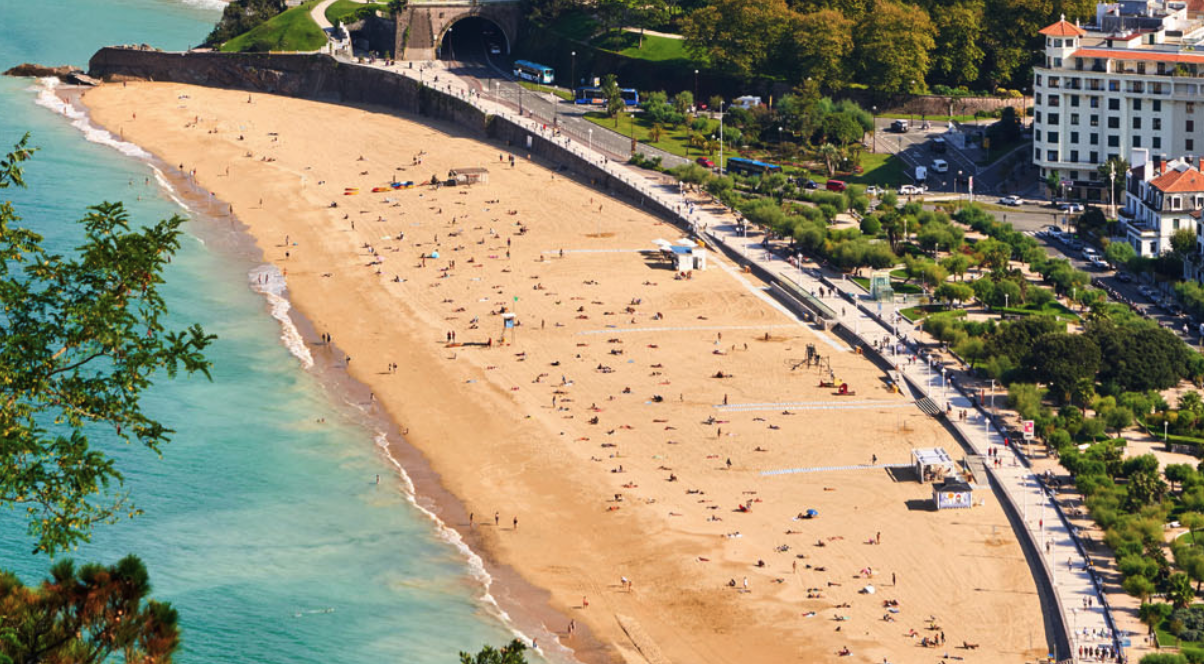
Antiguo sits at the far end of the bay, next to Ondarreta beach and the Comb of the Wind. It is residential, quiet and very much a family area.
In its favour: Ondarreta is smaller and less busy than La Concha, with sand that slopes gently. You have the Miramar Palace, the Igeldo funicular and the bay promenade at hand, and at night you sleep without noise.
Against it: the Old Town is about 25 minutes away on foot and at night you will end up taking the bus or a taxi. There are fewer bars and shops, and it gives a slight sense of being on the edge of town even though you are not. Prices are similar to Gros, around 90 to 160 euros in mid-season.
Amara: cheap and residential
Amara is the neighbourhood to the south, next to the Anoeta stadium. People from Donostia live here and you see few tourists. It is the most economical option, with rooms and flats under 100 euros in mid-season.
In its favour: price, local supermarkets and a good city bus connection to the centre.
Against it: no beach, no views and almost nothing to do in the neighbourhood itself. You will spend 20 to 30 minutes walking every time you want to go into town, or depend on the bus. It pays off if you are going to be out all day and only need somewhere to sleep.
How to choose for your kind of trip
If you are coming for three days to eat and go out at night, and the noise does not bother you, the Old Town. If you are travelling for work or passing through, the centre. If you are coming with small children and want naps and a calm beach, Antiguo. If budget rules above all else, Amara.
And if you want a reasonable amount of each: a neighbourhood with real life, the beach five minutes away, the old quarter ten, flat streets and prices that are not front-row, then Gros. With your own kitchen you can also go down to the markets and have dinner at home on the days you do not feel like going out, which you will be grateful for if you get a week of rain.
Frequently asked questions
Which is the best neighbourhood to stay in San Sebastián on a first visit?
For a first visit, Gros or the Old Town. The Old Town if nightlife is the priority; Gros if you would rather sleep well and pay less with the old quarter ten minutes away.
Do I need a car?
No, and in the centre it is more of a nuisance than a help. The city is walkable and the urban bus network covers the rest, with low-floor vehicles and a ramp on most routes.
Which neighbourhood works best with reduced mobility?
Gros, the centre and Antiguo: flat streets, wide pavements and more modern buildings with lifts. The Old Town is the most difficult because of the cobbles and the old blocks.
How much do you pay per night in San Sebastián?
It depends a lot on the date. In mid-season, between 80 and 200 euros depending on the area and the type of accommodation; in summer, Semana Grande and the film festival prices rise sharply and it is worth booking months ahead.
Is it worth staying outside the city?
Only if you are after a low price and travelling by car. You will lose San Sebastián's greatest asset, which is being able to do almost everything on foot.