This post is also available in:
 Español (Spanish)
  Français (French)
The short answer is yes: San Sebastián can be covered in a wheelchair, and rather better than most cities its size. Wide pavements with dropped kerbs, a city bus fleet that is one hundred per cent accessible, an assisted bathing service on the beach and a city that is mostly flat.
We write this guide out of direct interest: our apartment is adapted, and a good share of our guests travel with a wheelchair, with a walking frame or with reduced mobility through age. What follows is what they ask us before booking.
Getting around the city
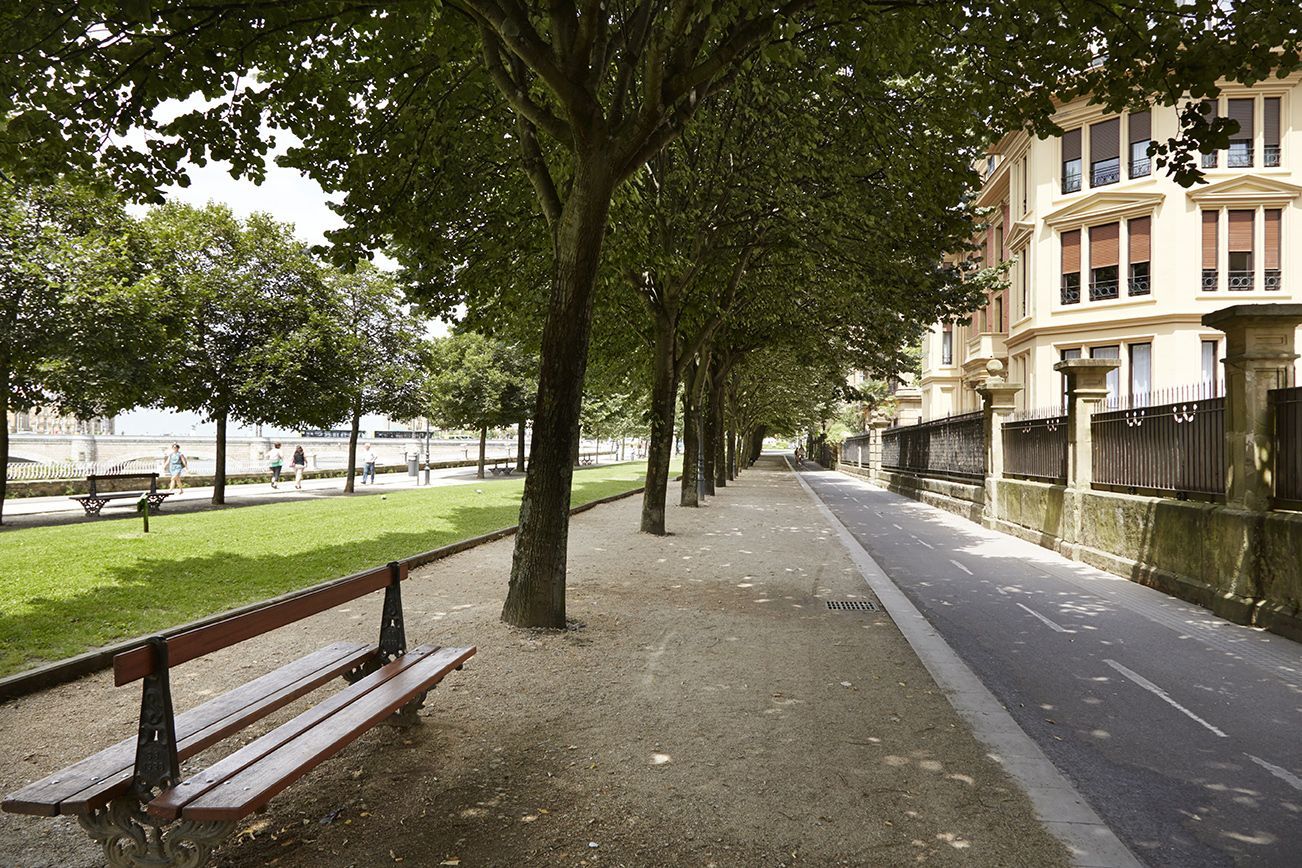
The centre of San Sebastián is flat. The three great promenades — La Concha, the Boulevard and Paseo de Francia — are continuous, wide and step-free, and between them they cover almost everything a visitor wants to see.
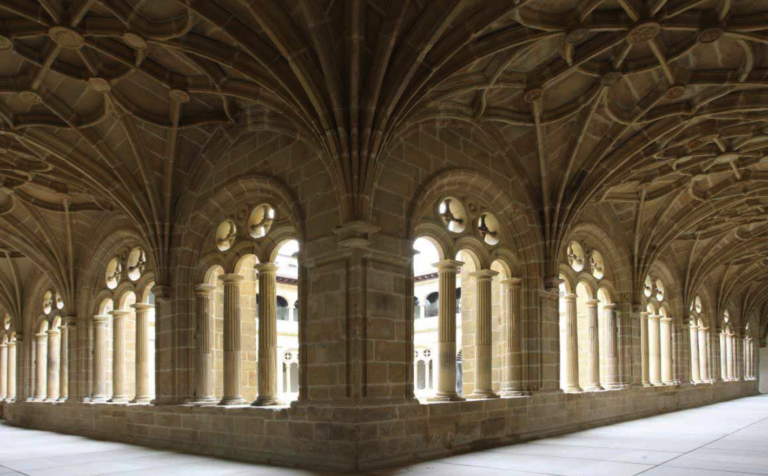
The exceptions are well known: Monte Urgull, the climb up to the Buen Pastor cathedral and some cobbled stretches of the Old Town, where the setts make themselves felt and the crowds make manoeuvring harder. Gros, by contrast, has smooth, wide pavements: it is the easiest neighbourhood in the city to move around in a wheelchair.
Accessible beaches
Of the three city beaches, two offer real accessibility services.
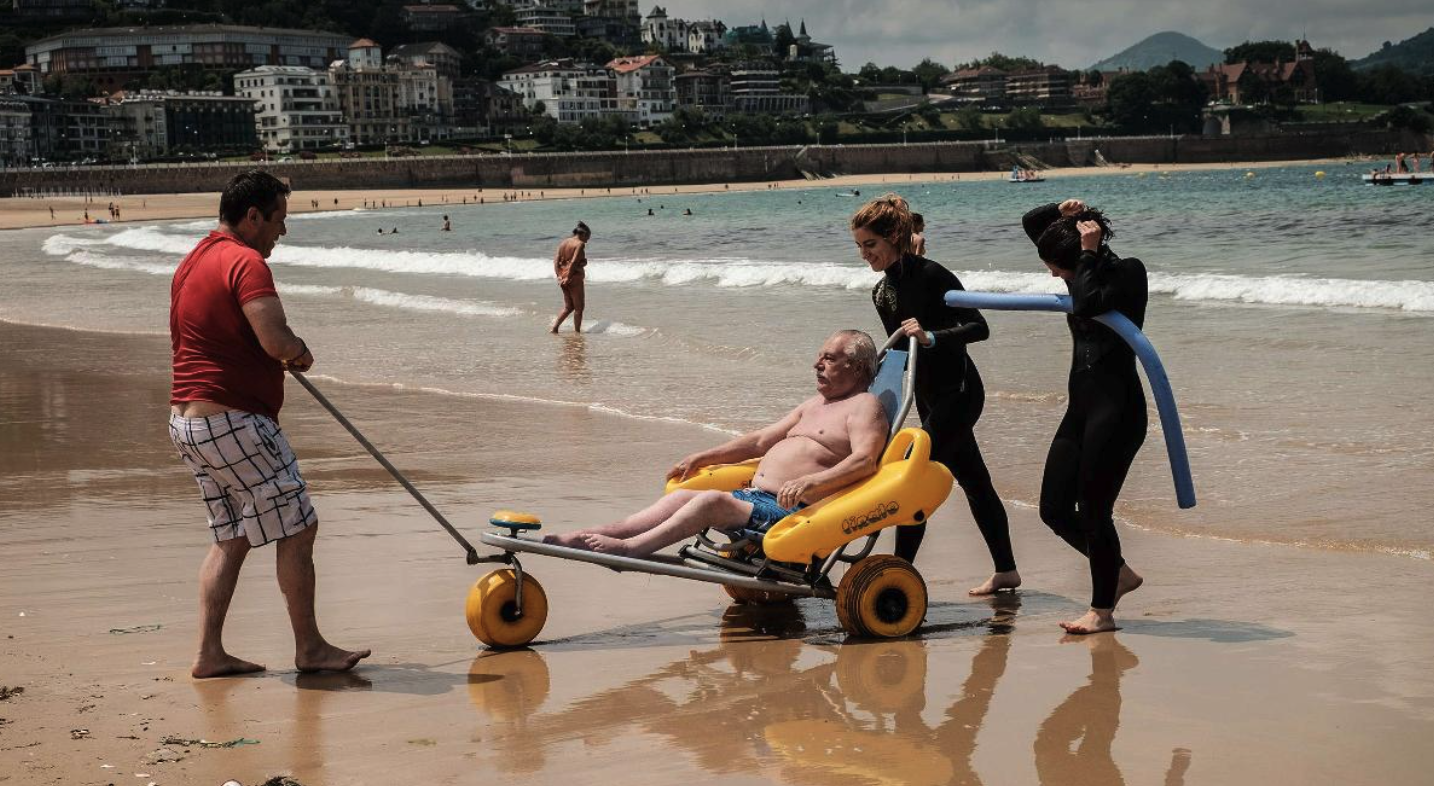
La Concha is the best equipped. It has wooden walkways down to the water's edge, free amphibious chairs, floating crutches, adapted changing rooms and accessible toilets. The assisted bathing service is run by the Red Cross: trained volunteers who go into the water with you, life jacket included.
| Assisted bathing at La Concha | Detail |
|---|---|
| Period | 15 June to 15 September |
| Hours | 11:00 to 19:30 |
| Telephone | 662 387 008 |
| Price | Free |
| Booking | Calling ahead is recommended |
Zurriola, the Gros beach, has access ramps from the promenade and wooden walkways in season. The services are more limited than at La Concha, but you can reach the sand without steps and the seafront promenade is accessible all year. Ondarreta, the third, has walkways and fewer adapted services.
One honest note: Zurriola has swell almost all year, so for a calm swim La Concha wins on the sea as well as on the equipment. We break it down in our guide to accessible beaches.
Accessible transport
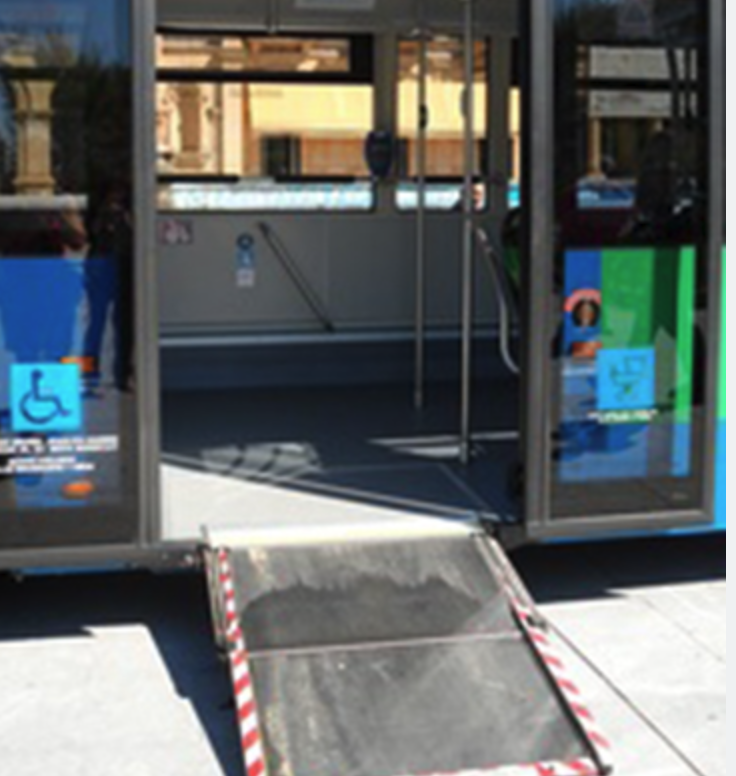
City bus. One hundred per cent of the Dbus fleet is accessible: low floor, automatic ramp at the centre door, a reserved wheelchair space and stop announcements on screen and over the speakers. Wheelchair users and blind passengers can travel with a companion free of charge; ask the driver for the companion ticket as you board.
A single fare with the Mugi card (rechargeable, sold in tobacconists and at the Dbus office) is around 0.80 euros; paying cash, around 1.80.
Adapted taxi. The city has 17 taxis with a platform or ramp, with room for one wheelchair and several companions. You book them on 943 404 040, they run 24 hours and there is no accessibility surcharge. As there are few of them, it is worth booking ahead, especially during festivals.
Train. The Renfe station and the Euskotren stations have lifts and ramps down to the platforms. From our front door the station is a minute away, which makes trips to Hendaye or the coast very easy.
Car. There are reserved bays for people with reduced mobility all over the city, especially in the centre and along the promenades. The European parking card is valid here.
Accessible accommodation in Gros
Beduria A is on Paseo de Francia, on the bank of the Urumea, in a completely flat area. Access is barrier-free from the street: entrance at street level, a lift and a mezzanine floor, with no steps in between.
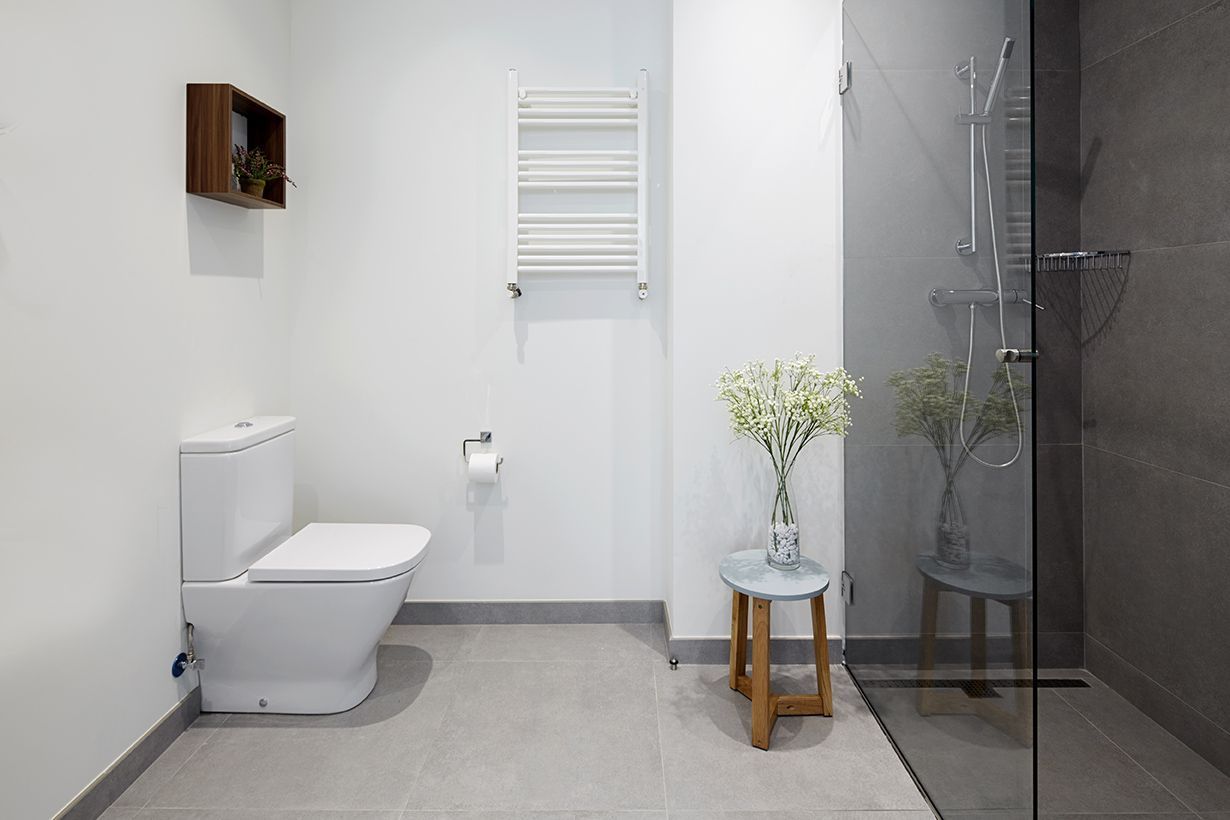
Inside there are two bedrooms and two adapted bathrooms, with level-access showers and turning space; wide doors, rooms big enough to manoeuvre in and electric blinds. It sleeps up to six, so it suits a couple or a family.
The location is part of the accessibility: Zurriola is five minutes away, the Old Town ten across the bridge and the station one. All flat. If you want to see the area in detail, we describe it in our guide to the Gros neighbourhood.
Eating out without barriers
San Sebastián eats at the counter, and that is exactly the part that takes planning. Many bars in the Old Town have a step at the door, high counters and little space between tables; in Gros and in the Ensanche, on the other hand, street-level access is common and the places are roomier.
Two pieces of advice we always give: go outside peak hours, because the problem is usually not the door but the people; and call ahead if you are going to eat sitting down, to confirm whether there is an adapted toilet, which is the detail that most often fails.
Three flat routes around the city
The classic walk (about 2.5 km). Paseo de Francia, the Kursaal bridge, the Boulevard, City Hall and the La Concha promenade. Flat from start to finish, with dropped kerbs at every crossing. Around 40 minutes at an easy pace.
Gros and Zurriola (1.5 km). From Paseo de Francia to the Zurriola promenade, coming back through the inner streets of the neighbourhood. Short, flat, with benches and toilets along the way.
Monte Igueldo by funicular. The funicular is accessible and goes up to the summit, from where you see the whole bay. The route to the lower station, along the La Concha promenade, is flat. Check the timetable, which is reduced in winter.
Hiring equipment
If you cannot bring your own chair or you need an electric scooter, there are hire companies operating in the city with delivery to your door, Motion4Rent among them. You book online and they bring the equipment to your accommodation; it is worth doing so in advance in high season.
Other useful resources
The tourist office on the Boulevard is on the ground floor, is accessible and has information in braille. The city council's official accessible tourism website publishes accessibility sheets for monuments, museums and businesses: it is the source we recommend before finalising plans. There are adapted public toilets on the La Concha promenade, the Boulevard and the Old Town.
If you are coming during the festivals, bear in mind that crowds change the rules: during the Tamborrada, for instance, Gros and the Boulevard are far more practical than the Old Town.
Frequently asked questions
Is San Sebastián accessible for wheelchair users?
For the most part, yes. The centre is flat, the pavements are wide with dropped kerbs, the city bus fleet is fully accessible and there are adapted taxis and assisted bathing on the beach. The exceptions are the hills and some cobbled stretches of the Old Town.
Can you swim in the sea in a wheelchair?
Yes. La Concha has free amphibious chairs and a Red Cross assisted bathing service from 15 June to 15 September, 11:00 to 19:30. Telephone: 662 387 008.
How do I book an adapted taxi?
By calling 943 404 040, 24 hours a day. There are 17 adapted vehicles in the city and they charge no surcharge, but it is better to book ahead.
Is there genuinely barrier-free accommodation?
Beduria A is: street-level access, a lift, wide doors, two bathrooms with level-access showers and turning space, in a flat part of Gros.
How much is the bus and can I travel with a companion?
Around 0.80 euros with the Mugi card and 1.80 in cash. Wheelchair users and blind passengers can bring a companion free of charge by asking the driver for the ticket.